
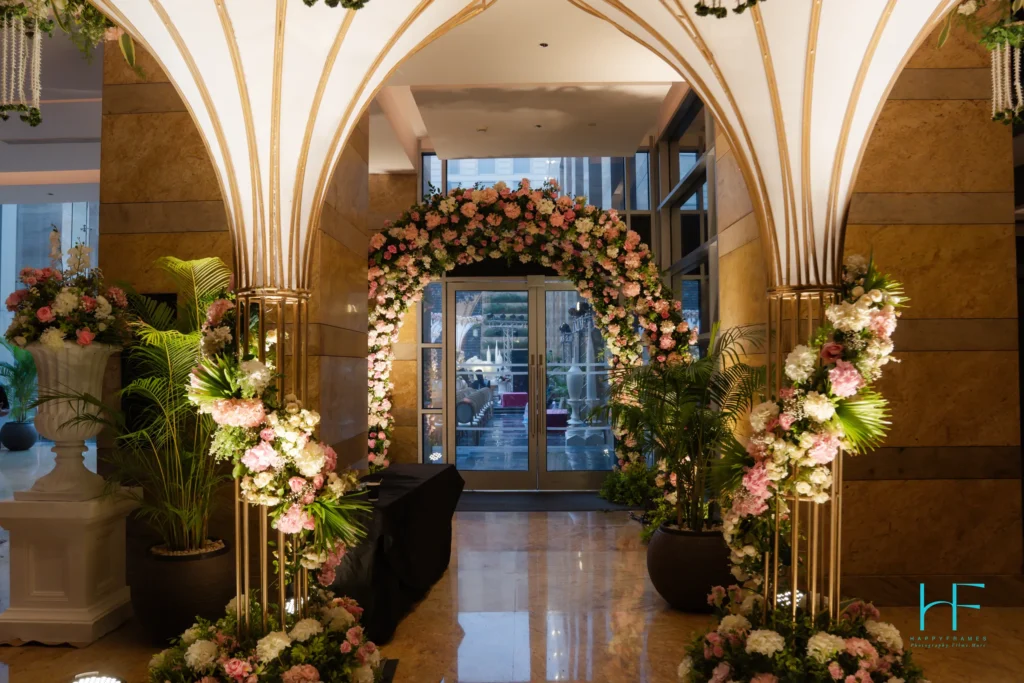
The most luxurious weddings aren’t the ones with the most things. They’re the ones where guests feel considered.
Not “pampered” in an obvious way. Considered in a quiet way. The Jain guest doesn’t have to ask twice. The elder doesn’t have to climb stairs. The diabetic guest isn’t left guessing. The friend with a food allergy doesn’t feel awkward at the buffet. The guest who arrived from overseas doesn’t feel lost. The couple’s parents aren’t solving problems in the middle of a function.
In India and the UAE, where destination weddings often involve multiple venues, multiple events, and travel-heavy guest lists, special requests are not side tasks. They are a core part of luxury event management. Because the way you handle special requests is the way guests measure hospitality.
At The Wedding Trunk (established in 2017, planning across India and the UAE), we plan weddings end-to-end from “they said yes” to “thank you for coming,” including RSVP systems, hospitality desks, hotel coordination, logistics planning, vendor management, and on-ground show-running. If you want guest comfort planned properly from the start, visit www.theweddingtrunk.com or call India: +91 98925 99799 or UAE: +971 56 934 3443.
A quick, simple note on venue recce and why it matters for guest comfort
A venue recce is when you go to the location in advance to check everything properly, instead of assuming it will work on the day. For a wedding, venue recce includes checking the space layout (stage, seating, entry and exit), understanding lighting and decor possibilities, looking at power supply, sound setup and AC, planning camera angles and photography spots, identifying guest flow and parking, and spotting any problems in advance. Venue recce is a pre-visit to plan everything smoothly and avoid last-minute issues. For special requests, it helps you confirm ramps and elevator routes, locate the closest washrooms, plan shorter walking paths for elders, identify shaded waiting areas, and design food service flow so dietary lanes don’t turn into long, awkward queues.
The goal: guests should feel supported without feeling “singled out”
The best handling of special requests has three outcomes:
- needs are met smoothly, without repeated asking
- the solution feels discreet, not spotlighted
- the family and couple are not managing it on the day
To achieve this, you need a system. Not last-minute kindness. A system.
Step 1: Capture special requests early, at RSVP stage
Most discomfort starts because the right questions weren’t asked early enough.
A destination-wedding-ready RSVP collects:
- dietary preference (vegetarian, vegan, Jain, halal, no onion/garlic)
- allergies (nuts, seafood, gluten, dairy)
- medical considerations that affect meals (diabetes, low-salt requirements)
- mobility needs (stairs limitation, wheelchair, walking support)
- sensory sensitivities (sound sensitivity, discomfort with crowding)
- family with kids (high chair needs, early meal needs)
It’s not intrusive. It’s good hosting.
If you want an RSVP system that captures the information venues and caterers actually need, reach us at www.theweddingtrunk.com.
Step 2: Create three comfort tiers (so you don’t overcomplicate everything)
Special requests become easier when you stop treating them as one big category.
A practical tier system:
- Tier 1: Elders and mobility needs (comfort seating, short routes, early food access)
- Tier 2: Dietary and medical needs (Jain, allergies, diabetic-friendly, low spice)
- Tier 3: Situational comfort (overseas guests, kids families, sensory concerns)
This helps the planner team allocate solutions without turning the wedding into a rulebook.
Step 3: Dietary needs: plan a service system, not a separate menu
In Indian weddings, food is abundant. Yet guests with dietary needs still struggle because the system is unclear.
What works in luxury event management
- A clearly briefed “dietary lane” at the buffet (small, visible, calm)
- Staff who know what is Jain, what is allergen-safe, what is mild
- Labels that are discreet and clean (not loud printouts)
- One point person from catering who owns dietary questions
- Priority service for elders and kids so they aren’t standing in queues
The common mistakes
- “Jain available on request” but no staff knows where
- Allergies handled casually without confidence
- Mild food options hidden at one counter far away
- Long queues for the only Jain counter, making guests feel exposed
A smarter approach: duplicate high-demand dietary options instead of creating one tiny corner. It reduces queues and makes the experience feel normal.
If you want catering and service flow planned with guest comfort at the centre, call UAE: +971 56 934 3443.
Step 4: Timing is a comfort tool (especially for elders, kids, and medical needs)
Special requests often become problems because meals open late or gaps are too long.
A guest with diabetes needs predictable food timing. Elders need earlier meal access. Kids need food before the late-night program begins.
A premium timing approach includes:
- meal anchors that do not shift easily
- early dining access for elders and kids
- hydration points that are constant and visible
- short snack windows between long events
This is why show-running and F and B planning must be aligned. If dinner is delayed, everything feels less luxurious, regardless of decor.
If you want meal timing protected through disciplined show-running, reach us at www.theweddingtrunk.com.
Step 5: Accessibility: make movement easy before guests have to ask
Accessibility is not only about wheelchairs. It’s about making the day physically easy.
What to plan for
- ramps and elevators that are actually usable
- shortest routes to seating and washrooms
- seating with back support and easy exits
- drop-off points close to entrances for elders
- a quiet holding space for those who need breaks
- clear signage and coordinators guiding guests so they don’t wander
The reality in India and the UAE
Some venues are beautiful but involve:
- long walks
- stairs between key areas
- narrow pathways
- crowded lobbies
This is why venue selection and venue recce matter. A planner sees access the way a guest experiences it, not the way a brochure photographs it.
If you want your venue shortlist built around guest comfort and accessibility, call India: +91 98925 99799 or UAE: +971 56 934 3443.
Step 6: Guest comfort isn’t only physical. It’s also informational.
Guests feel stress when they don’t know what’s happening.
This is why the hospitality layer matters:
- one pre-arrival pack with timings, entrances, dress guidance
- short WhatsApp-style reminders only when needed
- one guest support number that is not the family
- a hospitality desk that handles questions quietly
When guests have one place to go, parents stop becoming the help desk.
If you want a hospitality desk setup that absorbs guest queries across the weekend, reach us at www.theweddingtrunk.com.
Step 7: The “discreet support” team makes special requests feel seamless
A wedding feels premium when solutions happen quietly.
A strong on-ground structure includes:
- a hospitality lead who handles guest requests
- a venue liaison who can solve access issues quickly
- a catering point person briefed for dietary needs
- a transport coordinator for elders and special movement support
- one showrunner who protects timing so comfort doesn’t collapse
This is what luxury event management looks like behind the scenes: not chaos, just ownership.
Step 8: Comfort planning that costs little but feels huge
These are small decisions that guests feel more than decor:
- water points visible and consistent
- shaded waiting area outdoors
- a quieter seating zone away from speaker stacks
- early return shuttles for elders and families with kids
- clean washroom access routes
- a small comfort lane at buffet service
- chairs with back support for elders at key functions
These touches are not complicated. They just need planning attention.
Copy-ready checklist: handling special requests well
Use this checklist across your weekend:
Data and planning
- RSVP captures dietary, allergy, medical, and mobility needs
- special requests grouped into comfort tiers
- catering brief includes Jain, allergy-safe, mild options and service ownership
Food and timing
- meal anchors protected through run sheets
- elders and kids have early access lane
- hydration points visible at every event
Accessibility
- ramps and elevators confirmed via recce
- shortest routes mapped for elders and mobility needs
- seating planned with back support and easy exits
- drop-off points close to entrances identified
Communication
- pre-arrival pack includes entrances, timings, and support number
- one guest support number active throughout the weekend
- hospitality desk set up to absorb guest queries
On-ground ownership
- hospitality lead, catering point person, and transport coordinator assigned
- showrunner protects timing so comfort isn’t sacrificed
Special requests are not interruptions. They are part of hosting.
When dietary needs are handled without awkwardness, accessibility is planned instead of improvised, and guests always know who to contact, the weekend feels calm and high-end. Parents stay present. The couple stays relaxed. Guests feel genuinely cared for.
That is what luxury event management should deliver across India and the UAE.
If you’d like The Wedding Trunk to plan your guest comfort system end-to-end, from RSVP data to hospitality desk support to on-ground coordination, we’re here:
www.theweddingtrunk.com
India: +91 98925 99799
UAE: +971 56 934 3443