
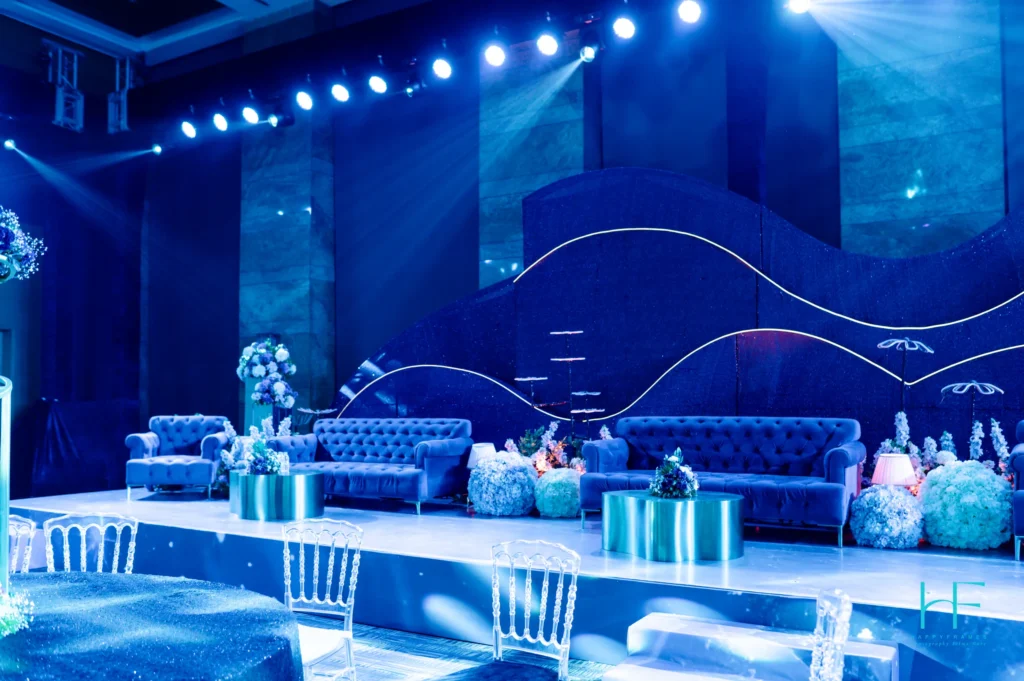
Most couples begin luxury wedding planning in Dubai with the same question: “How much should we spend?”
The better question is: “What are we actually buying?”
Because in Dubai, luxury is not only how a wedding looks. It is how smoothly it runs inside a city that operates on timing windows, venue rules, and service standards that do not bend for last-minute improvisation. The budget goes where the experience is built: guest comfort, service pacing, production discipline, and the invisible staffing that keeps your family out of operations.
At The Wedding Trunk (established in 2017, planning across India and the UAE), we plan weddings end-to-end from the first budget conversation to on-ground execution, with a detail-led approach that protects the couple and families. If you want a budget map built around your guest profile and wedding style, visit www.theweddingtrunk.com or call India: +91 98925 99799 or UAE: +971 56 934 3443.
The Dubai reality: budgets don’t “go up,” they get triggered
Dubai wedding budgets rarely explode because a couple suddenly chooses something extravagant. They expand because certain decisions trigger additional layers.
Common triggers include:
- Choosing a venue that requires heavy external infrastructure
- Adding functions without adjusting staffing and setup windows
- Adding entertainment without planning riders, rehearsals, and technical time
- Designing decor that needs long installs and multiple resets
- Letting timelines slip, which triggers overtime across vendors and venues
Understanding where the budget really goes helps you choose intentionally instead of reacting.
The Dubai Wedding Budget Map
Below is the simplest way to understand where your money goes in luxury wedding planning in Dubai, and why these buckets matter. For each bucket, you will see what you are paying for, what drives the cost, and how to control it without lowering the experience.
1) Venue and event spaces (the bucket that decides everything else)
What you’re paying for
- Event space hire, packages, minimum spends, staffing inclusions
- Access to specific areas and time windows
- In-house furniture and infrastructure, or restrictions on external vendors
Why it costs
Dubai venues are polished, but they run on defined operations. The venue is not just a backdrop. It sets your logistical reality: when vendors can load in, how long sound checks can run, what is allowed in the space, and how many transformations can happen in one weekend.
How to control it
- Choose venues based on flow, not only photos. A venue that supports multiple functions with minimal resets can save significant spend across decor and manpower.
- Ask what is included versus what is charged separately. Many “small” inclusions add up when assumed incorrectly.
- Decide early whether you need multiple venues or one primary venue. Transfers and duplicate setups increase spend quickly.
If you want us to evaluate venues through a budget-plus-flow lens, reach us at UAE: +971 56 934 3443.
2) Accommodation and rooming strategy (quietly one of the biggest costs)
What you’re paying for
- Hosted rooms, room blocks, upgrades, early check-ins, late check-outs
- Guest experience at the hotel, especially for travel-heavy lists
Why it costs
In Dubai, guest expectations for hotel comfort are high. In Indian and South Asian weddings, rooming also carries family dynamics and hierarchy. If the rooming plan is not structured, upgrades get approved emotionally, one request at a time.
How to control it
- Lock a hosted versus self-paid policy early and communicate it clearly.
- Build rooming lists with structure: elders first, family clusters, then general guests.
- Avoid upgrading rooms as a default. Use upgrades strategically for key elders and immediate families.
If your guest list is flying in from multiple places, we can build your rooming strategy and guest journey plan as part of our planning process. www.theweddingtrunk.com
3) Hospitality desk and guest operations (the budget that protects family peace)
What you’re paying for
- RSVP and guest list management systems, confirmations, follow-ups
- Hotel coordination, check-in support, room list version control
- A real hospitality desk handling guest queries
- Arrival support and on-ground guest assistance
Why it costs
Luxury is felt when guests do not have to “figure it out.” In destination weddings, every gap in information becomes a call to the family. A hospitality desk is not a decorative counter. It is an operating system.
How to control it
- Treat guest operations as essential, not optional. When this is under-scoped, families end up hiring last-minute help anyway.
- Use clear communication in an email and WhatsApp-style rhythm so guests receive what they need, when they need it.
- Plan peak windows: arrivals, check-ins, function start times, departures.
If you want your guests supported from RSVP to room key without family stress, call India: +91 98925 99799 or UAE: +971 56 934 3443.
4) Logistics and transport (the budget that protects your timeline)
What you’re paying for
- Airport pickups, transfers between hotels and venues, shuttle loops
- Drivers, coordinators, buffer vehicles for delays
Why it costs
Dubai is efficient, but weddings are complex. Guests land at different times, some arrive late, and function start times depend on movement. When logistics are improvised, the day starts late and the budget leaks into overtime.
How to control it
- Plan arrivals in waves, not as individual custom pickups for every flight.
- Design transfer loops with clear pickup points and timing buffers.
- Keep the venue count minimal when possible. Every additional venue multiplies movement cost.
5) Food and beverage (where luxury is felt through timing)
What you’re paying for
- Catering packages or hotel F and B minimums
- Staffing, counters, live stations, service style
- Add-ons, overtime, specialty ingredients
Why it costs
For guests, food is the most immediate experience. The cost drivers are not only ingredients. They are service speed, staffing ratios, counter layout, and timing coordination with your program.
How to control it
- Edit the menu for execution. Fewer dishes done perfectly beats a huge menu served late.
- Limit live stations to one or two hero moments, duplicate high-demand counters instead of adding many slow stations.
- Protect dinner timing in the run sheet. Late dinners cause overtime and fatigue.
If you want a function-by-function menu plan with service flow built in, reach us at www.theweddingtrunk.com.
6) Production: sound, lights, staging, show-running (the budget that makes the night feel polished)
What you’re paying for
- Audio, lighting, staging, LED screens if needed
- Technical crew, rehearsals, sound checks, cueing
- Power planning and venue compliance
Why it costs
In Dubai, production quality is a major part of what guests perceive as luxury. And production is time-sensitive. If sound checks are rushed or access windows are missed, you end up paying extra crew hours and last-minute fixes.
How to control it
- Choose production based on reliability, not just equipment lists.
- Build a run sheet with protected technical windows.
- Keep the program structured in blocks so the evening has rhythm and dinner service does not fight performances.
7) Decor and styling (the visible bucket that is often misunderstood)
What you’re paying for
- Design concept, florals, fabric, props, custom builds
- Installation time, resets between functions, manpower
- Rentals, staging finishes, table styling
Why it costs
Decor cost is not only flowers. It is labour and time. Multiple functions with distinct looks can require multiple builds, multiple resets, and longer install windows. Dubai venues also have access rules that can make installs more complex.
How to control it
- Pick one or two hero moments per function, keep the rest edited and consistent.
- Reuse smartly. Repurpose installations between events instead of rebuilding from scratch.
- Design around the venue architecture. When the venue is strong, decor can be lighter and still look expensive.
8) Photography and videography (the budget that captures it, but also affects your timeline)
What you’re paying for
- Team size, coverage hours, deliverables, edits
- Additional cameras, reels, same-day edits, drone permissions where applicable
Why it costs
Coverage for multi-day weddings is intensive. The hidden driver is time: early calls, long days, multiple venues, and the need for structured shot windows.
How to control it
- Decide what matters most: documentary coverage, cinematic films, or social-first content. Then build the package around that.
- Create realistic photo windows so the team is not constantly pulling the couple away.
- Align photo and video with the run sheet so timing holds.
9) Planning, coordination, and on-ground team (the system behind “effortless”)
What you’re paying for
- End-to-end planning, vendor management, budgeting, run sheets
- On-ground execution team: showrunner, hospitality desk staff, logistics coordinators
- Shadows or personal assistance for the couple and key families
Why it costs
This is the part that determines whether your wedding feels like a hosted celebration or a project the family is managing. The best weddings look calm because a team is absorbing the noise: vendor questions, guest issues, timing shifts.
How to control it
- Scope the team realistically to your guest count and function count.
- Demand role clarity. “On-ground support” should mean defined roles and coverage hours.
- Invest in couple and family support. It protects the emotional experience, and it prevents last-minute chaos.
If you want a full planning structure across India and the UAE with on-ground execution in Dubai, speak to The Wedding Trunk at www.theweddingtrunk.com.
10) Contingency and “unseen” costs (the bucket that prevents panic spending)
What you’re paying for
- A buffer for changes, delays, and last-minute needs
- Overtime triggers across vendors and venues
- Small compliance items, extra staffing, emergency rentals
Why it costs
Luxury weddings are complex. The buffer is not wasted money. It is protection against panic decisions that are always more expensive.
How to control it
- Keep the program realistic. Overpacked schedules create overtime.
- Lock major decisions early. Late changes are expensive in Dubai.
- Use a planner-led approvals process so nothing is committed casually.
The fastest way to make your Dubai budget feel “smart”
If you remember only three rules for luxury wedding planning in Dubai, make them these:
- Spend on flow before you spend on flourish
Guest operations, hospitality, logistics, and show-running create the feeling of luxury. - Edit the weekend
Fewer events with stronger execution feels more high-end than a packed itinerary with delays. - Protect your timeline
Late starts create overtime across food, production, venue staffing, and vendors.
If you would like us to build a budget map around your guest journey and wedding style, reach us at www.theweddingtrunk.com, India: +91 98925 99799, UAE: +971 56 934 3443.
The most useful way to think about your wedding budget is this: you are not paying for things, you are paying for outcomes.
Guests who feel cared for. Families who feel proud, not stressed. Rituals that feel serene. Evenings that move with rhythm. A couple who looks calm because nothing operational is reaching them.
That is where the budget really goes. And when it is placed correctly, luxury stops being a look and becomes a feeling.